
Death Must Die — Mac download
Ticked
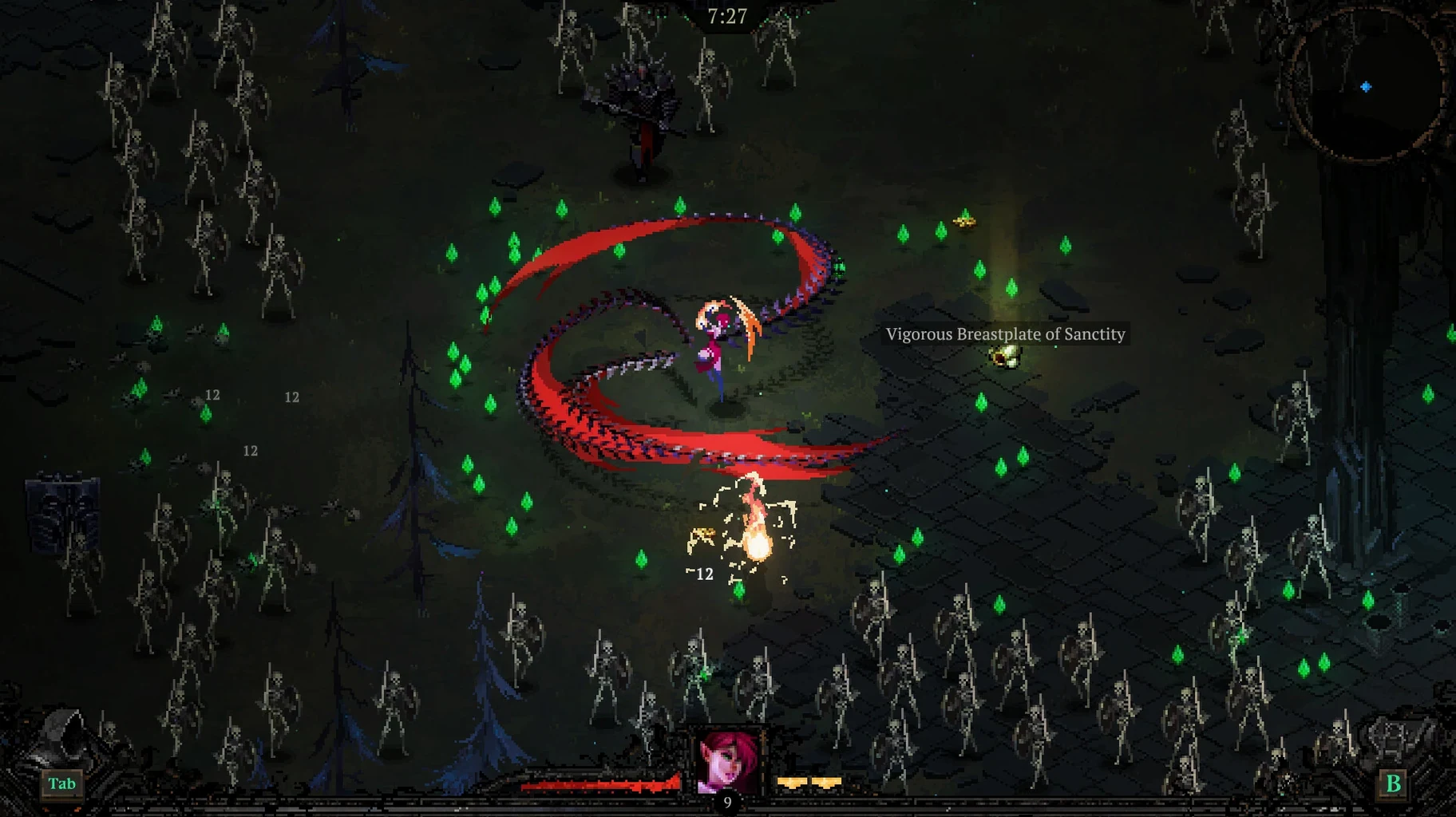
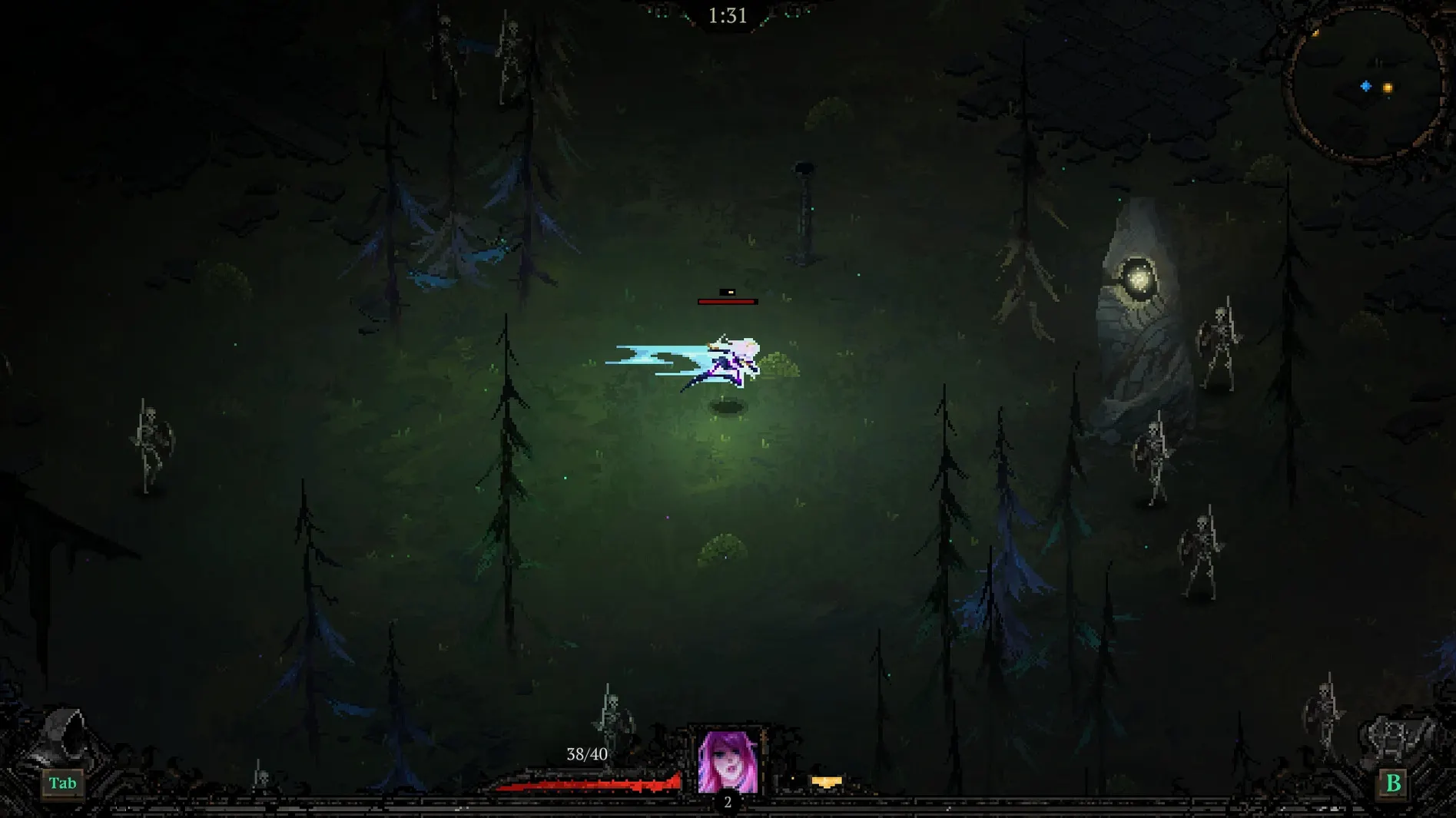
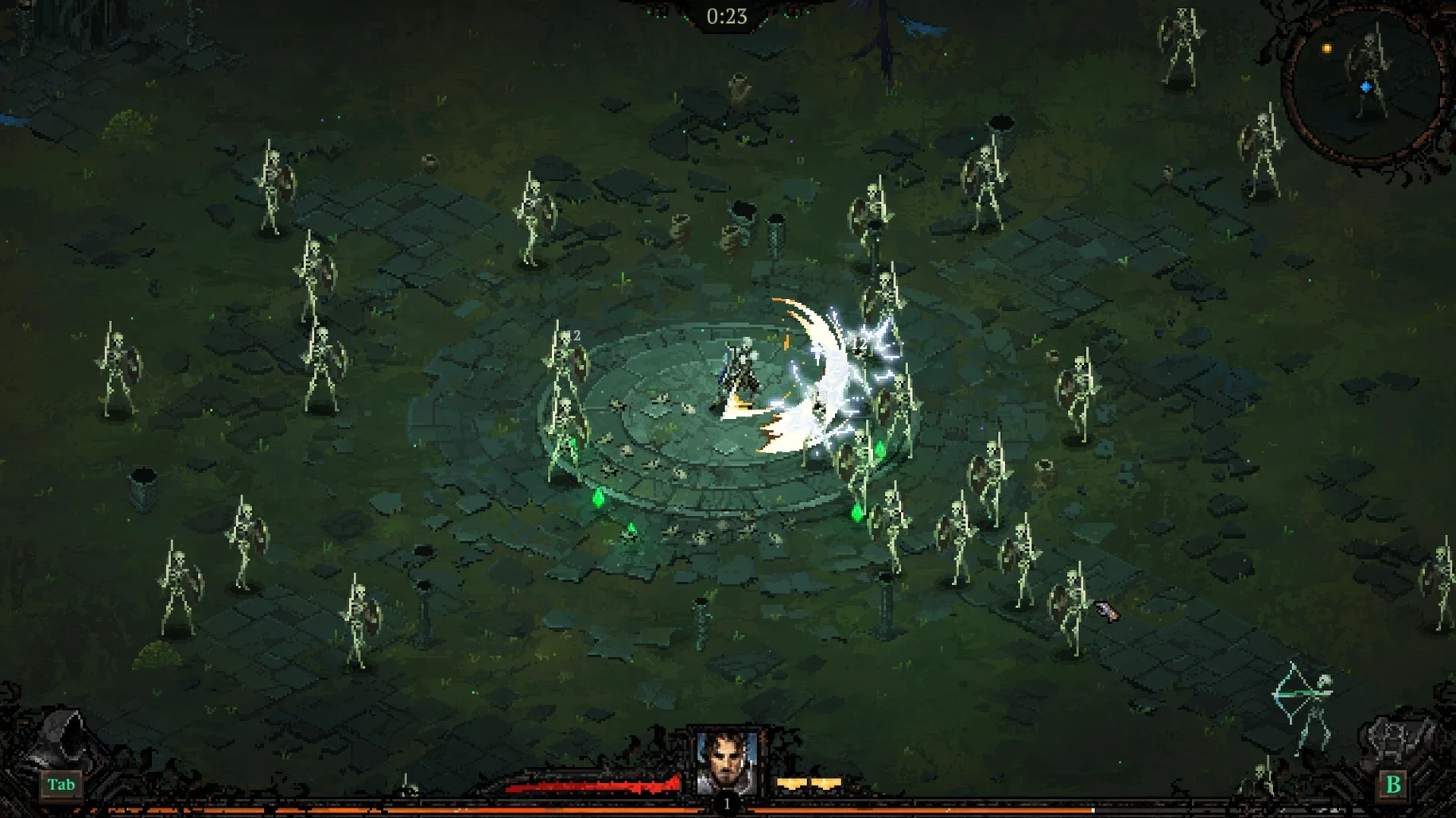
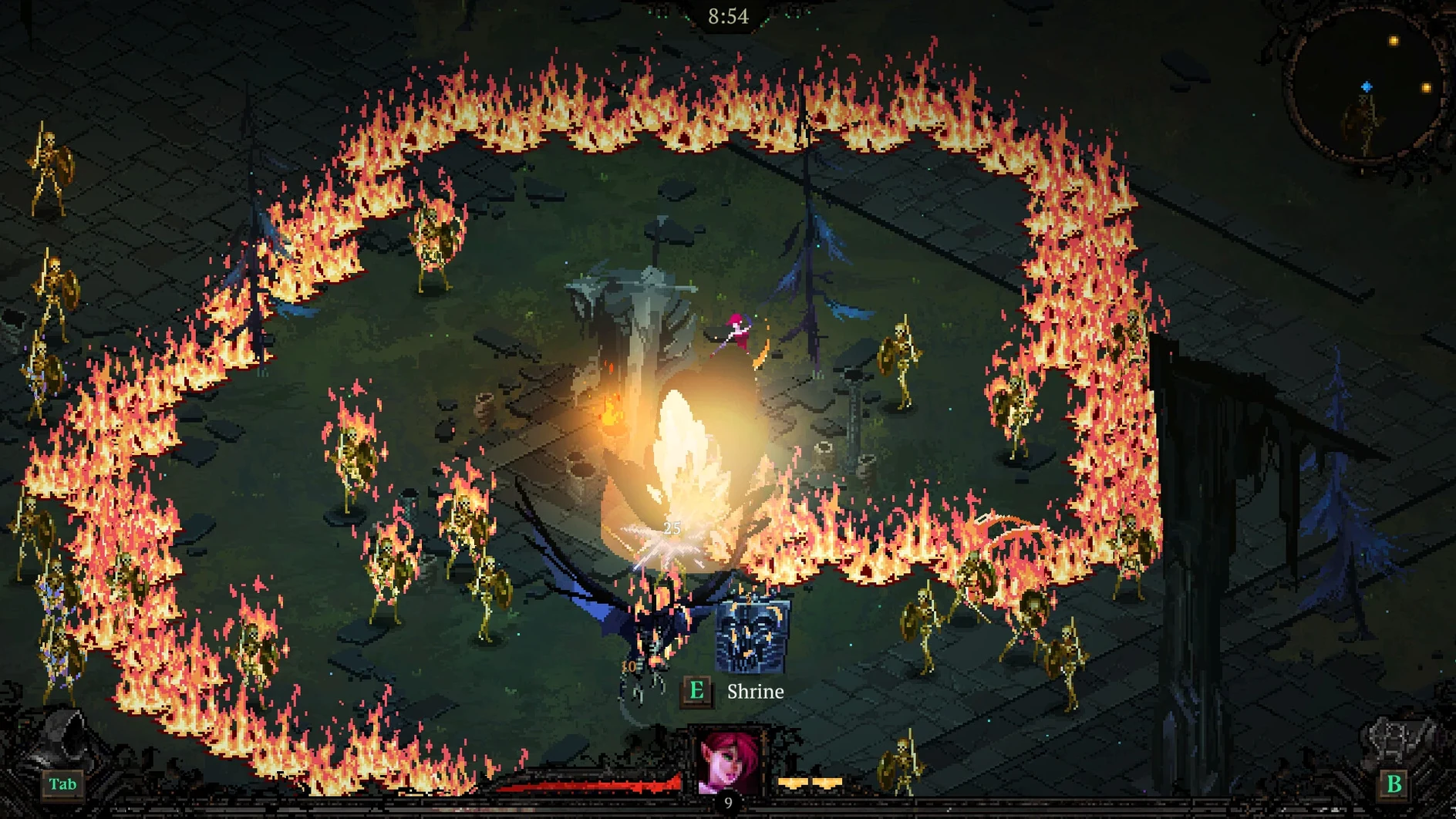
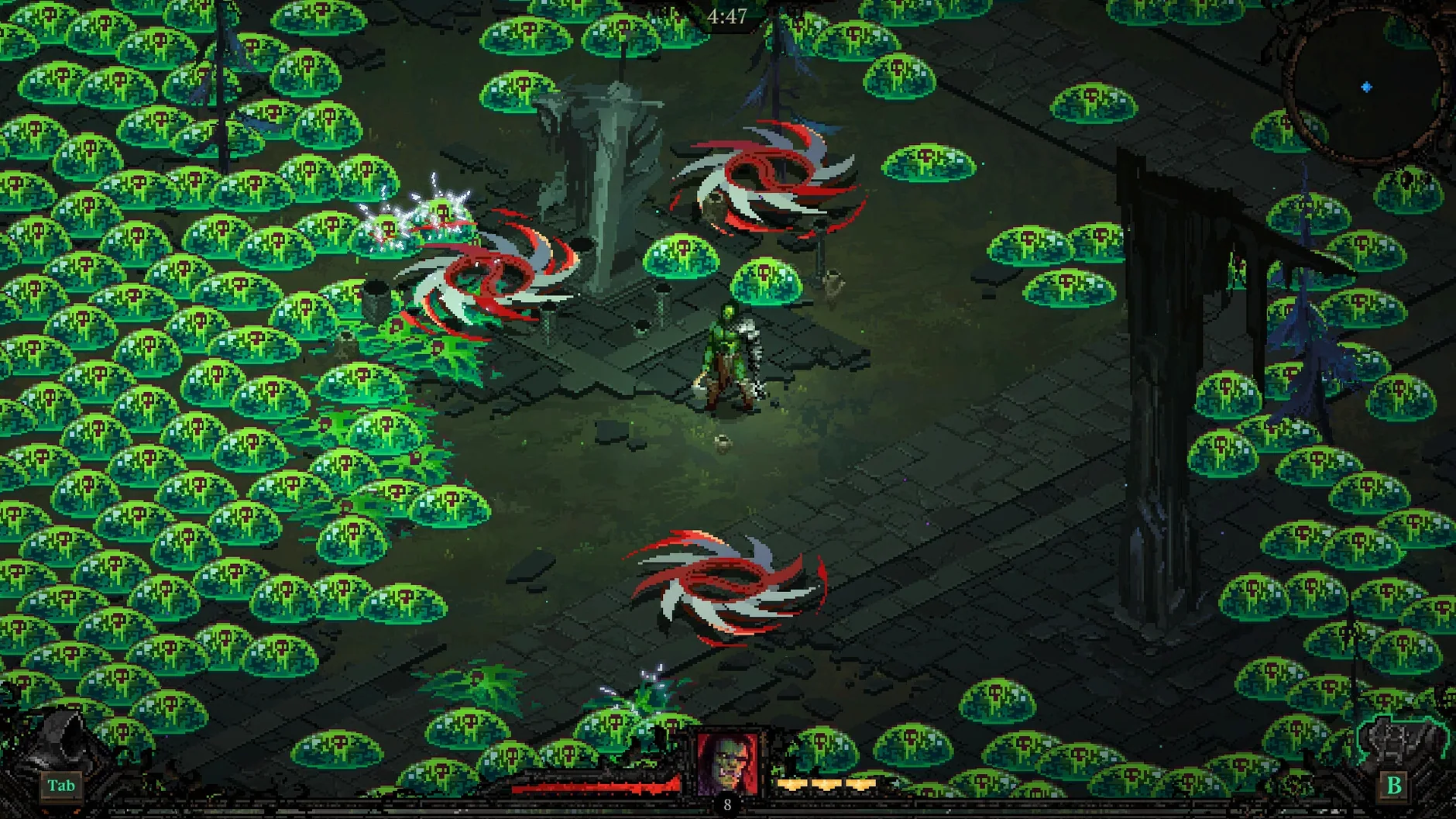
Time Warp blessing lets you slow projectiles to a crawl. In a bullet heaven, that is not just a perk — it is a survival strategy. Death Must Die drops you into arenas swarming with enemies, and your build decides whether you last thirty seconds or thirty minutes.
Banshee, Knight, Sorceress — each hero feels different before you even pick a blessing. From there, hundreds of god blessings branch into elemental, melee and summoning paths. One run you are a fire-wielding juggernaut; the next, a fragile necromancer hiding behind skeletons. The roguelite loop stays tight because the choices actually change how you play.
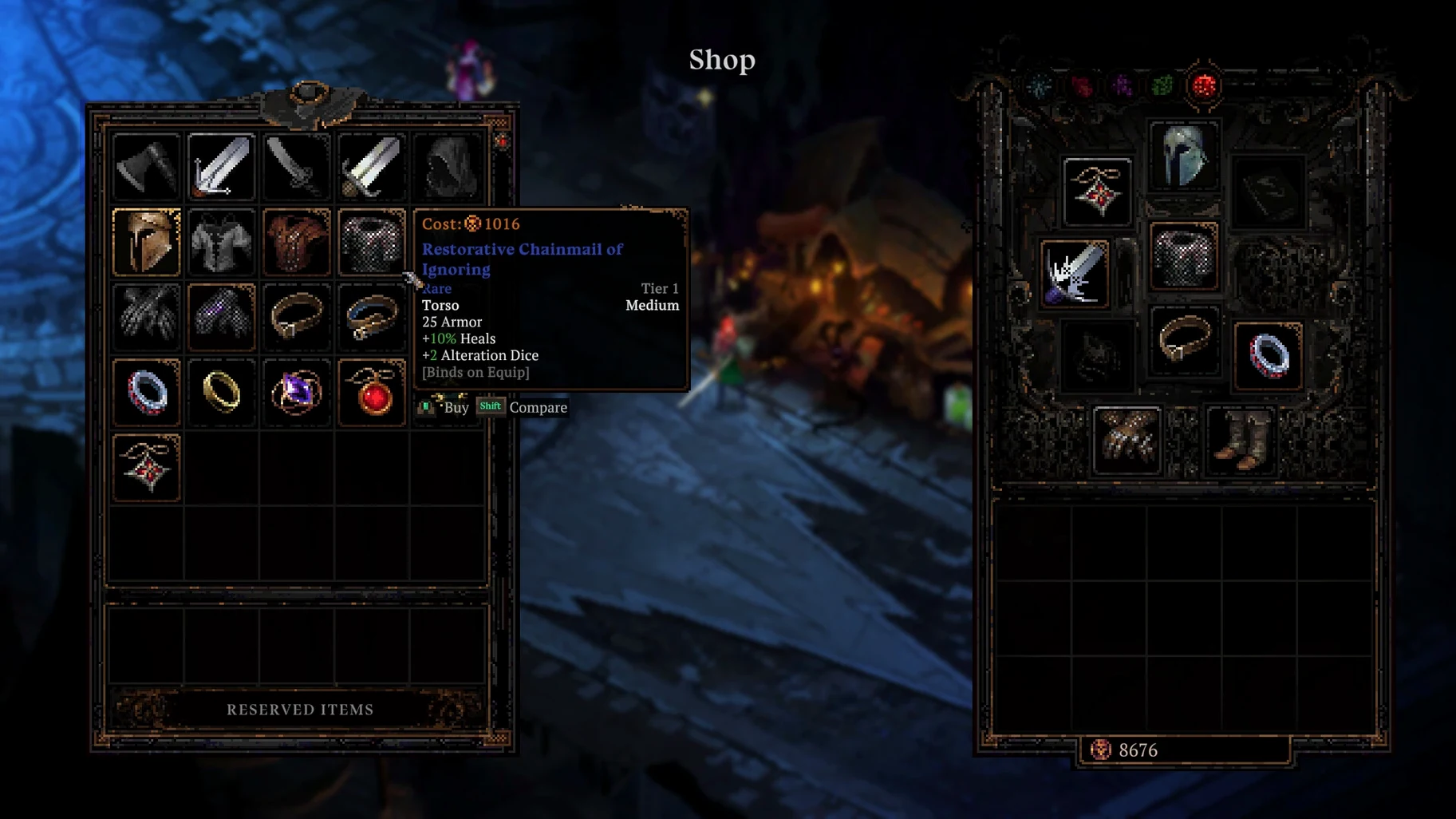
Loot reinforces that. Random and unique items drop constantly. A single ring can shift your entire blessing priority mid-run. Assembling an equipment set that clicks gives the same satisfaction as a perfect skill tree. Hard-to-obtain achievements sit in the background, giving min-maxers something to chase after the credits would roll — if the game ever stopped getting updates.
Banshee blessing paths now need wider planning
Version 0.8.8a shipped without formal patch notes, which is common for early-access titles that iterate fast. In practice, the update tightened hero balance. Banshee builds that relied on a single overpowered blessing path now demand more thought. Knight survivability improved slightly at lower levels, so the first five minutes feel less punishing while you assemble your core gear.
Enemy density in the third circle crept up. Runs that used to coast through mid-game now force earlier movement decisions. Summon-focused Sorceress builds gained indirect value because of that — skeletons body-block projectiles more reliably when the screen fills with threats.
Item drop rates for unique rings were adjusted upward, which makes hybrid builds easier to pivot into. A few older shrine interactions were cleaned up, so blessings with conflicting tags no longer cancel each other silently. The net effect: fewer runs end to hidden rule clashes, and more end to your own poor positioning.
Minimum specs, offline play, and save portability
Does this run on Intel Macs or only Apple Silicon?
Both. The build supports ARM and x86 64-bit Macs natively. Tested on a Mac mini M4 running macOS Tahoe, but older Intel machines handle it fine — just expect lower enemy counts in the busiest arenas if your GPU is ageing.
How much space does the download need?
The disk image is compact by modern standards. Once copied to Applications, the app sits under 2 GB. No additional launchers or runtimes required.
Is the save file local?
Yes. Progress lives on your Mac, with no cloud sync. If you move machines, grab the save folder from ~/Library/Application Support.
- macOS (ARM and x86 64-bit supported)
- English interface





Comments 0
Sign in or create an account to add a comment.
No comments yet. They go up after moderation.