
Neural DSP Soldano SLO-100 X — Mac download
Ticked
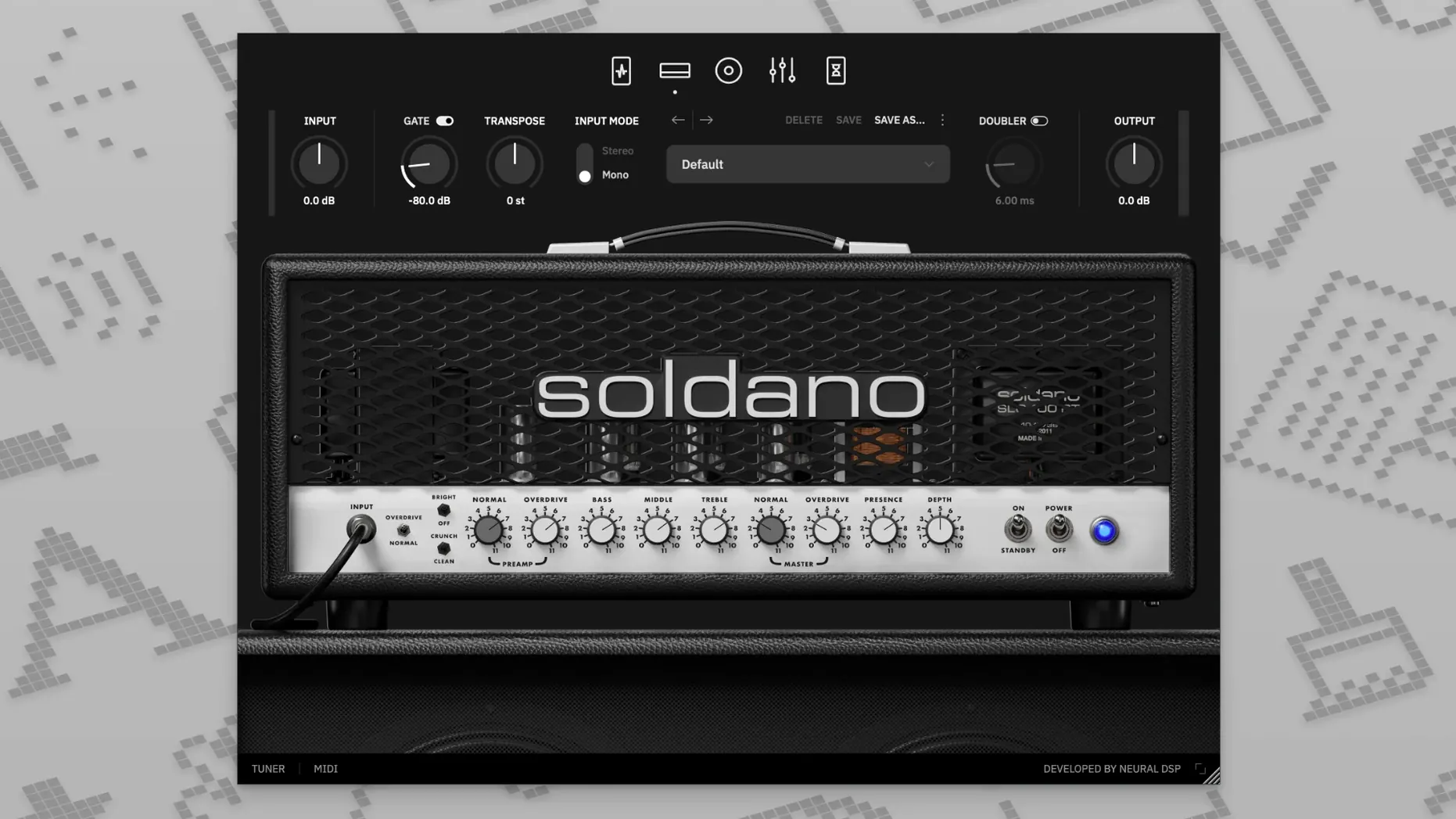
Four amp modes sit at the centre: Clean, Bright, Crunch and Overdrive. That is the channel checklist for the Neural DSP Soldano SLO-100 X, a plugin rebuild of the head that defined the American high-gain sound. It runs on Apple Silicon and Intel Macs, as AU, VST or AAX in a 64-bit host.
On the track
Drop it on a guitar DI. The preamp section gives you compressor, boost, overdrive and a vintage chorus before the amp stage. Set the mode, dial in the gain, then shape with the nine-band EQ and its high-pass plus low-pass filters. A doubling effect widens a mono part without leaving the channel strip.
On the bus
Send a rhythm group to it for parallel saturation. Crunch mode with the boost engaged pushes mid-range density into a drum room bus or a vocal parallel chain. Keep the output wet/dry balanced and use the EQ to carve out lows you do not want back in the mix.
Fixing a missing plugin on Apple Silicon
- Plugin not showing in the DAW. Rescan your plugins after install. On Apple Silicon, confirm your DAW runs natively – the plugin is ARM-ready, but a Rosetta-only host can stall the scan.
- High CPU on Clean mode. Four amp modes share the same engine. Drop the oversampling rate in the plugin header or freeze tracks while editing.
- Latency with the doubler. The doubling effect introduces a small delay. Disable it while tracking; re-engage during mixdown.
- Cabinet IRs not loading. Drag and drop user IRs onto the cabinet section, not the preset browser. Unsupported sample rates get rejected – stick to 44.1, 48 or 96 kHz .wav files.
- Transpose artefacts. Shifting beyond ±3 semitones adds warbling on complex chords. For full drop-tunings, tune the instrument first, then use transpose for fine nudges.
Three amp plug‑in alternatives to weigh
Neural DSP Soldano SLO-100 X vs. ML Sound Lab Amped Flagship
Amped Flagship models a different high-gain American circuit. Both give you a four-channel layout. ML Sound Lab leans on a simpler EQ stack and fewer pre-amp effects. The SLO-100 X adds the nine-band graphic plus the chorus and doubler, so it covers more ground inside one plugin window.
Neural DSP Soldano SLO-100 X vs. Nembrini Audio Cali Reverb
Cali Reverb captures a hot-rodded, west-coast flavour. The Nembrini plugin loads quicker and uses less CPU. It does not include a doubler or transpose. The SLO-100 X gives you more tone-shaping tools and the cabinet IR loader for custom impulses.
Neural DSP Soldano SLO-100 X vs. Aurora DSP Rhino
Rhino is a multi-amp monster with a full pedalboard. It feels busier. The SLO-100 X does one amplifier and its four modes. That narrow scope means faster dial-in and fewer distractions. If you want a dense signal chain, Rhino wins. If you want the Soldano sound and nothing else, the SLO-100 X is the tighter pick.
Lock in your own Clean‑mode default preset
- Save a default preset. Load Clean mode, set the compressor to 2:1 with fast attack, engage the low-cut at 80 Hz. Save as "I. Calder default". Every new track starts from a known state.
- Audition the cab section alone. Bypass the amp and feed a DI through the cab loader. Swap through the first ten factory IRs. Note two or three favourites for later blends.
- Map the nine-band to a controller. Assign the 250 Hz, 1 kHz and 4 kHz bands to physical knobs or faders. Riding these three during playback teaches you the amp's midrange voice quicker than reading the manual.
- Run the standalone app once. Close the DAW, open the standalone, load a backing track, and jam. This confirms audio routing works and stops plugin-scan headaches during a session.
- Test the doubler on a stereo aux. Send a mono vocal or snare through it at 30% mix. Note the width, then save the setting as a studio trick preset.
- Updated modeling technology revisits the plugin from the ground up for the X version.
- macOS 10.15 or later
- Apple Silicon or Intel Mac
- 64-bit host software (AU, VST or AAX)
Questions the team asks
It includes Clean, Bright, Crunch and Overdrive modes, covering the full range from clean headroom to the high-gain tone the original amp is known for.
It runs as AU, VST and AAX. Logic Pro X 10.5 or higher is listed for AU, and Pro Tools 12 through 2020 for AAX.
Yes, it supports both ARM Apple Silicon and x86 64-bit Macs natively, requiring a 64-bit host and macOS 10.15 or later.



Comments 0
Sign in or create an account to add a comment.
No comments yet. They go up after moderation.