

Plugin Alliance Shadow Hills OptoMax — Mac download
Ticked
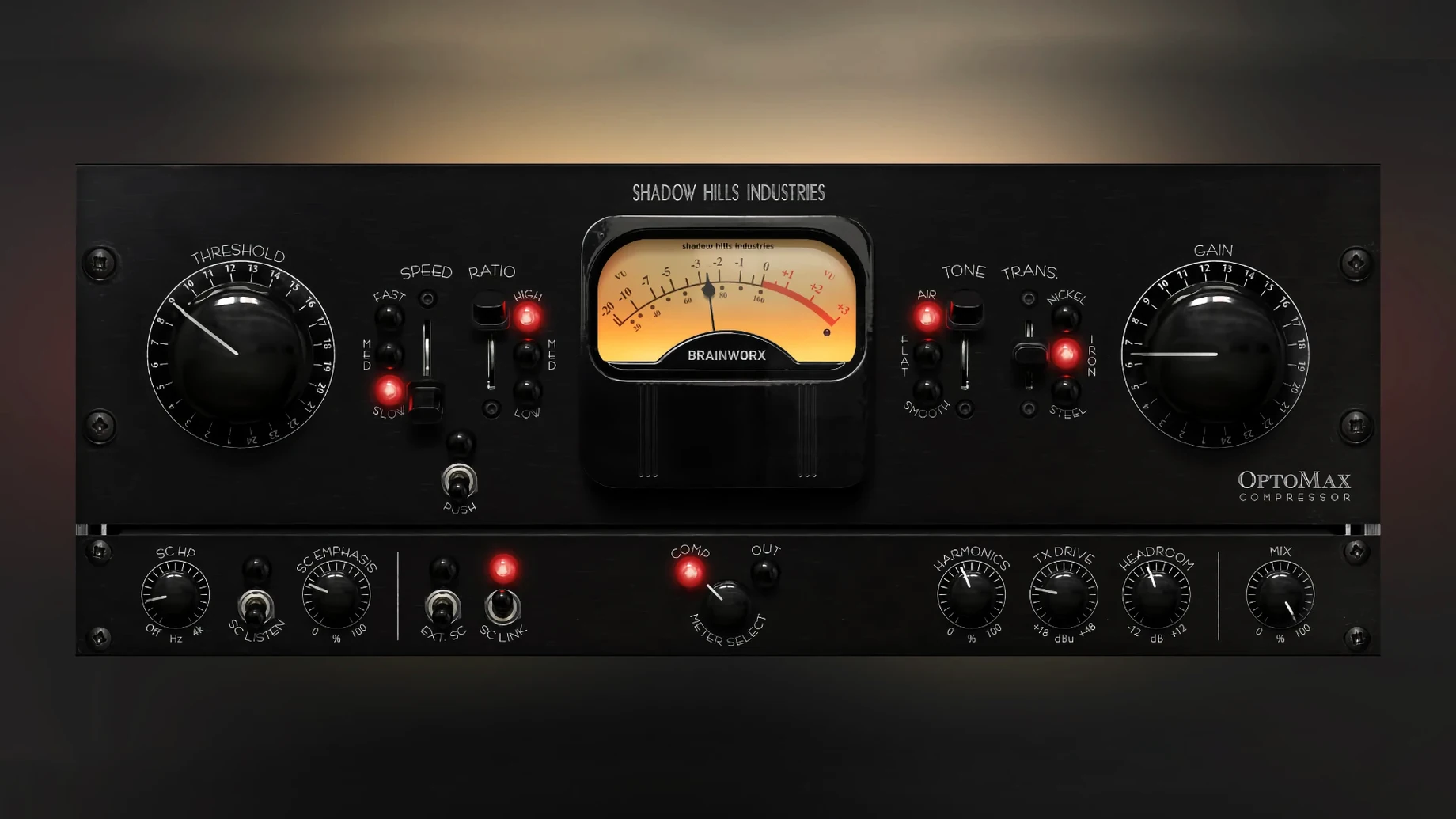
A vocal track sits too far forward, poking out of the mix. It needs weight, not gain. The OptoMax is loaded onto the insert. Attack set slow, ratio at 4:1, the needle barely twitching. The vocal settles back into the arrangement without losing presence.
Three transformer colours and a Mix knob for transients
| Type | Optical compressor |
| Developer | Plugin Alliance, Brainworx |
| Version | 1.0.0 |
| macOS | macOS 12 or later, Intel & Apple Silicon |
This is a single optical stage pulled from the Shadow Hills Mastering Compressor. A parallel Mix knob keeps transients intact. Three transformer types — Nickel, Iron, Steel — shift the low-end weight and harmonic texture. The Softness switch engages a high-frequency filter that rounds off brittle top end before the detector. Sidechain filtering lets you duck the compression around the kick without a separate routing headache. The gain reduction meter reads in dB. That is all you get. No extra modules. No distraction.
Fast response setting handles material classic optos miss
Does optical compression work on fast transients? Optical compressors are inherently slower than VCA or FET designs. The OptoMax includes slow, medium and fast response settings. The fast setting handles transient material better than a classic LA-style unit would, but if you need brick-wall peak limiting on a snare, you are in the wrong plugin category. Think vocal levelling and bass glue, not drum bus clamping.
What does the Shine mode actually do? Shine engages a high-frequency boost in the sidechain path. The compressor reacts to brighter peaks, which means sibilant vocals or splashy cymbals trigger the detector sooner. The result is a softer, darker top end — useful when a track feels brittle or a vocal needs de-essing before it hits the next processor.
Does it add latency? Yes. Optical modelling adds a small amount of latency, typically under 2 ms. It is not designed for live tracking. Mix and mastering workflows will not notice it. Your DAW handles delay compensation automatically.
Sits after corrective EQ and before a peak limiter
Place the OptoMax early in a vocal chain, after corrective EQ but before a fast peak limiter. It handles the broad dynamic shaping while the second compressor catches the spikes that slip through. On a mix bus, insert it before a saturation plugin. The transformer stage adds harmonic weight; pushing Nickel into the red before a tape emulation gives the low mids a rounded, gluey density.
The sidechain filter works directly with your kick drum routing. Send a kick to a bus, activate the high-pass filter in the OptoMax sidechain, and the compressor ducks the bass or pad group only when the kick hits. No extra routing plugins needed. macOS Audio Unit routing handles the sidechain input natively in Logic Pro and in most AU hosts that support sidechain inputs.
Parallel Mix control removes the need for a separate wet/dry bus. Push the compression hard — 8:1 ratio, fast attack — then blend back 40% dry signal. The body of the track compresses heavily while the transients stay crisp. One insert slot instead of three.
Three response speeds versus the LA-2A's single fixed curve
Shadow Hills OptoMax versus UAD LA-2A. Both are optical compressors. The LA-2A plug-in by Universal Audio models a single fixed-response unit. The OptoMax gives you three response speeds, three transformer colours and sidechain filtering. If you want a one-knob opto that just works, the LA-2A is simpler. If you want tone-shaping tools and faster recovery options, the OptoMax covers more ground.
Shadow Hills OptoMax versus Klanghelm MJUC. MJUC is a vari-mu style compressor. Different circuit topology, different compression character. MJUC adds harmonic saturation through tube modelling. The OptoMax adds harmonics through transformer selection. Use MJUC for a darker, thicker tube glue. Use the OptoMax for transparent levelling with optional transformer weight.
Shadow Hills OptoMax versus FabFilter Pro-C 2. Pro-C 2 is a clean digital compressor with eight styles, including an opto mode. It offers sidechain EQ, mid/side processing and detailed metering the OptoMax does not have. The OptoMax does one thing: optical compression with transformer colour. Pro-C 2 is the surgical tool. The OptoMax is a character box. Keep both. One for precision, one for tone.
- macOS 12 or later
- Intel or Apple Silicon Mac
Questions the team asks
Softness is a high-frequency mode that filters the sidechain signal, making the compressor less reactive to sharp top-end transients.


Comments 0
Sign in or create an account to add a comment.
No comments yet. They go up after moderation.