

AmpliTube — Mac download
Download (3.1 GB) Earlier builds
Ticked
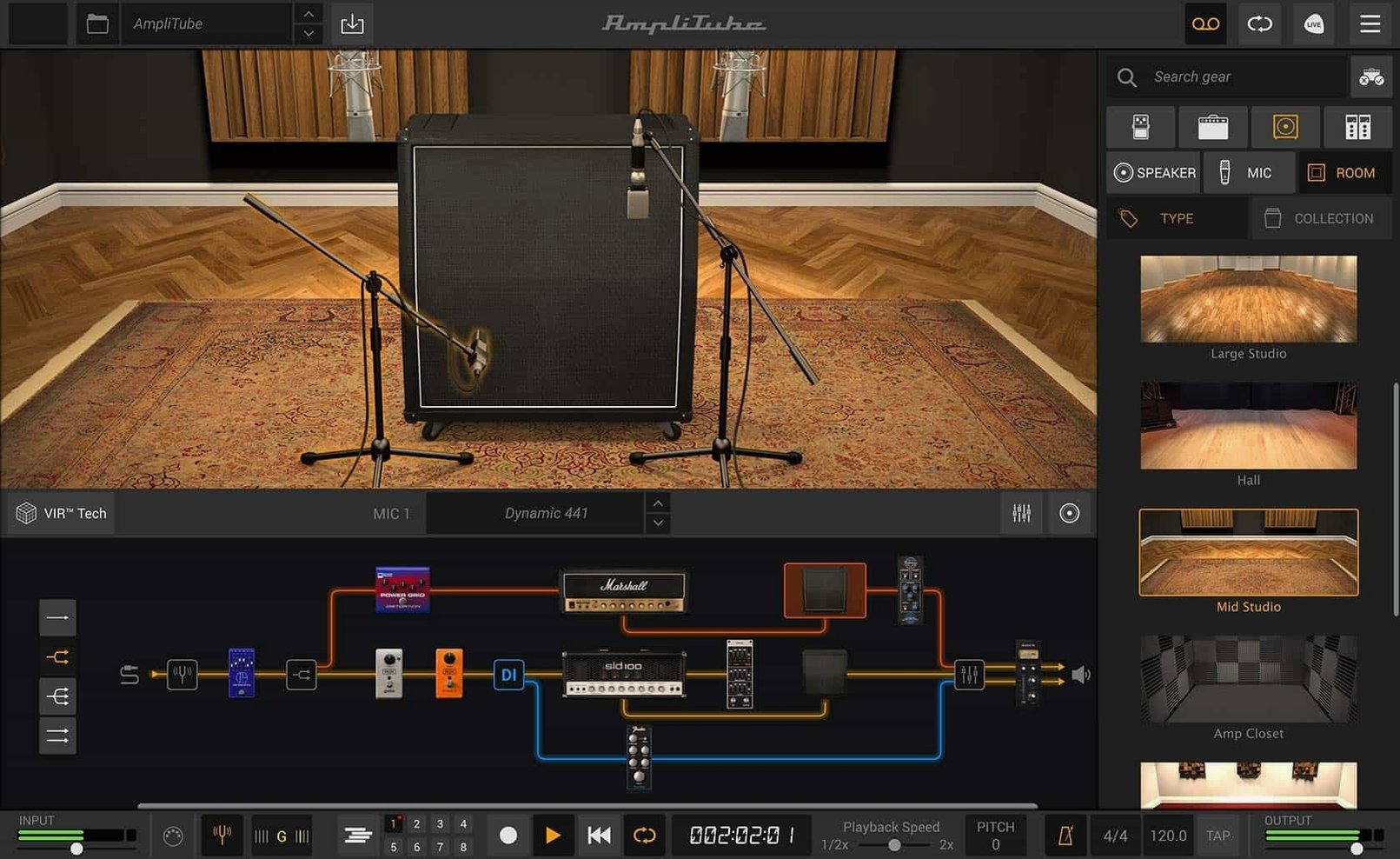
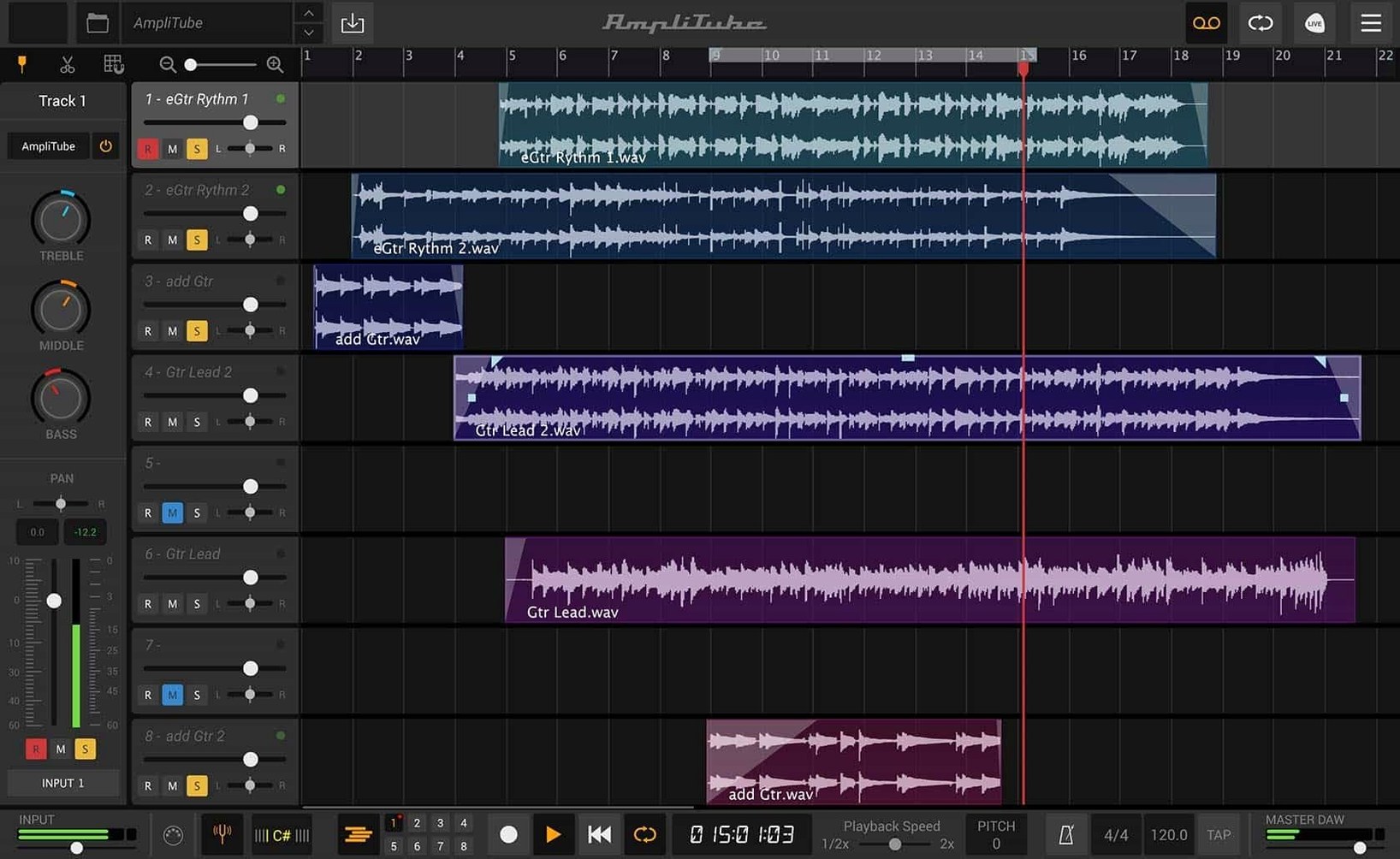
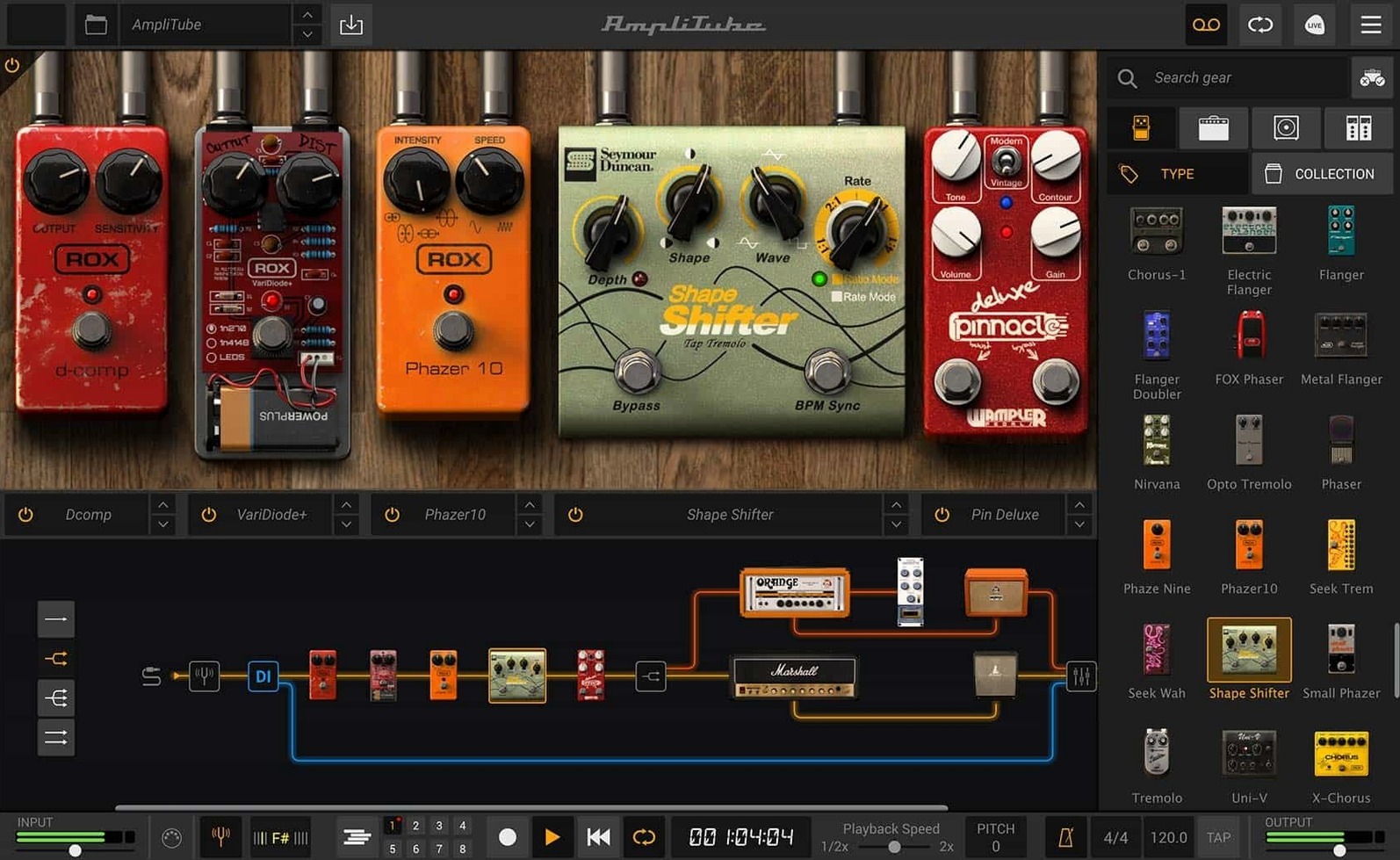
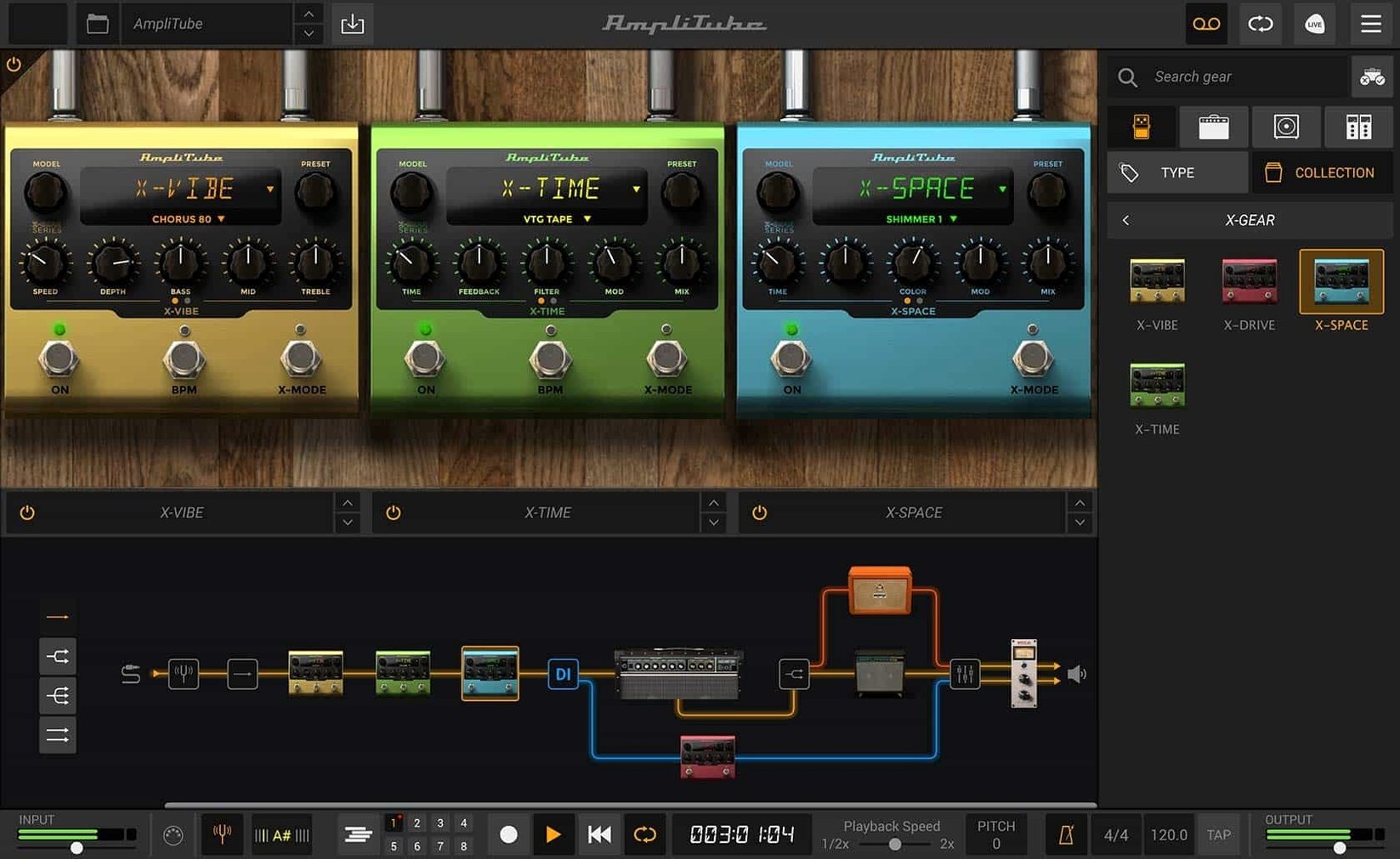
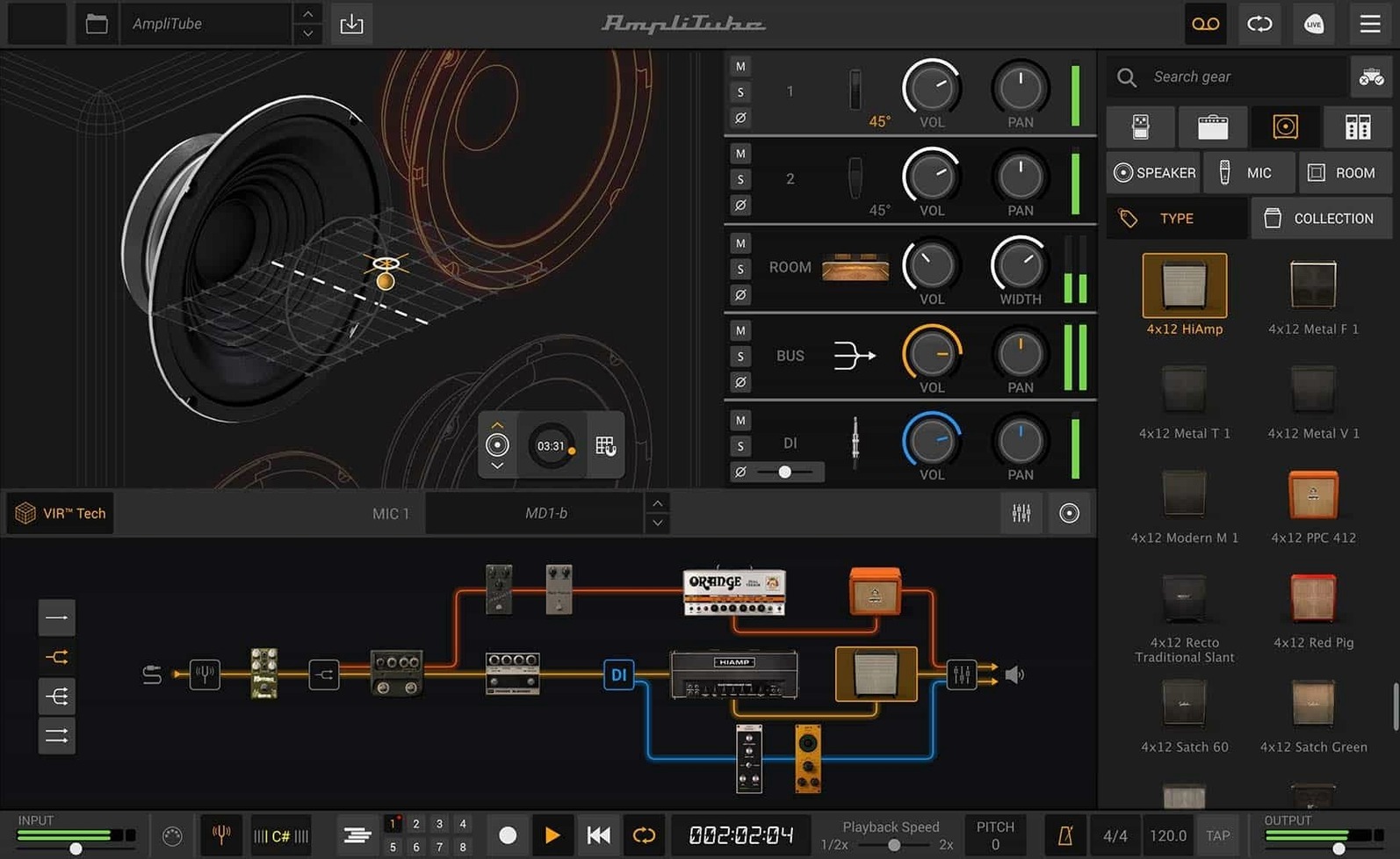
Guitarists and home-studio producers who build tones in the box turn to AmpliTube for its deep model collection. Version 5.8.2 keeps the core amp-and-cab workflow intact while adding new routing options and cabinet tech.
| Detail | Info |
|---|---|
| Version | 5.8.2 |
| Developer | IK Multimedia |
| macOS | 10.15 or later |
| Architecture | Intel & Apple Silicon |
The current build includes two new rooms and over 130 new models, bringing the total to more than 100 redesigned cabinets. A cabinet section with VIR technology lets you load custom IR files. The signal chain supports drag-and-drop routing, a mixed DI signal, and up to 57 simultaneous models. Five amp models come included, and the redesigned mixer carries built-in effects so you can shape a finished tone without leaving the plug-in.
Set input trim and two other defaults before you judge the tone
Open the standalone app, load the default preset, and tweak these three things before you judge the sound.
- Input level calibration. The input trim sits at unity by default. Run the built-in tuner, play your hardest chord, and lower the input until peaks stay green. A hot signal pushes every model too hard and masks the differences between amp types.
- Cabinet IR length. VIR tech defaults to a medium room. In the cab section, switch IR length to short for tight metal rhythms or long for ambient cleans. The difference is immediate and costs no extra CPU.
- Noise gate threshold. High-gain presets often leave the gate wide open. Pull the threshold up until hiss disappears at idle, then back it off slightly so sustained notes do not choke.
- Buffer size in standalone mode. The installer sets a safe 512 samples. If you monitor through the app and your interface supports it, drop to 128 or 64 samples for a snappier feel. AAX, VST, and AU instances follow the host DAW buffer.
Finding your amp voice faster than browsing preset menus
AmpliTube vs Guitar Rig
Guitar Rig packs a broader effects palette and a modular container system that encourages experimental chains. AmpliTube counters with more amp models and a cabinet section that accepts custom IR files — Guitar Rig's cab engine is older and less detailed by comparison. If your sessions lean on classic amp tones and mic positioning, AmpliTube gives you more to work with. For synth-like effect chains and quick sound design, Guitar Rig wins the speed test.
AmpliTube vs Neural DSP Quad Cortex (plug-in mode)
Neural DSP's captures feel immediate and amp-like under the fingers. AmpliTube's component-level modelling offers deeper editing — bias, sag, tube type — at the cost of a steeper learning curve. The free CS edition gives you 42 gear models to start, which no Neural DSP plug-in matches. For a quick, mix-ready metal tone, Neural DSP loads faster. For building a full studio rig with racks, rooms and a mixer, AmpliTube covers more ground.
AmpliTube vs Logic Pro's stock amps
Logic's Amp Designer and Pedalboard cover the basics well and integrate without extra install steps. AmpliTube adds VIR cabinet tech, custom IR loading, and up to 57 simultaneous models in series or parallel routing. Logic's stock tools feel lean and responsive; AmpliTube rewards the guitarist who spends an afternoon dialling in a room sound. The mixer with built-in effects also saves a trip to the DAW channel strip.
Workflow: building a crunch tone from scratch
This walkthrough uses the standalone app. No preset, no imported IR — everything built signal by signal.
- Clear the rack. Right-click the signal chain background and remove every module. Start with a blank canvas.
- Drop a tuner first. Drag the tuner module into slot one. Tune to standard pitch, then leave it bypassed. The tuner stays visible in the chain as a sanity check between takes.
- Add a clean boost pedal. Place one of the two new pedals — the green overdrive — before the amp. Gain at 9 o'clock, tone at noon, level at unity. This tightens the low end without adding fizz.
- Choose an amp model. Pick one of the five included amp models. A British-style head works for crunch. Gain at 1 o'clock, bass cut slightly to 10 o'clock, mids pushed to 2 o'clock, treble at noon. Presence to taste.
- Set the cabinet. Open the cabinet section. Select a 4x12 closed-back cab with VIR technology active. Position the mic halfway between the cone edge and centre. Pull the room mic fader up to 30 percent for natural ambience.
- Route in parallel. Split the signal after the amp. Drag a second cabinet onto the B path with a different mic — a ribbon at the cone edge. Blend the A and B paths in the mixer until the tone thickens. The redesigned mixer lets you pan each path independently.
- Add a rack reverb. Insert one of the 23 new rack effects — a plate reverb — after the mixer. Mix wet at 25 percent, decay short. This glues the two cab signals together.
- Save as a user preset. Name it with the guitar and pickup type so you can recall it fast.
The whole chain uses fewer than 10 CPU-heavy modules and leaves room for later additions like a delay or a second amp model.
Why installers ask for 3 GB when the plug-in only takes 800 MB
AU, VST, AAX all load ARM-native—no Rosetta
Yes. The 5.8.2 build includes ARM code. No Rosetta translation layer needed. The standalone app and the AAX, VST, and AU plug-in formats all load natively on M-series Macs running macOS 10.15 or later.
How many models come in the free CS edition?
AmpliTube 5 CS includes 42 gear models. That covers a workable set of amps, cabs, pedals and rack effects. You can use it indefinitely without adding more models. If you later need a larger selection, the MAX edition bundles 11 brand or artist collections totalling over 400 gear models.
Can I load my own impulse responses?
Yes. The cabinet section accepts custom IR files. Drop a WAV-format IR onto the cab slot and the VIR engine handles the rest. This is useful for matching a physical cab you already own or using third-party IR packs.
Is the mixer essential, or can I skip it?
The redesigned mixer sits at the end of the signal chain and carries built-in effects including EQ and compression. You can bypass it entirely. For standalone use without a DAW, the mixer saves you from opening a separate host just to balance levels or add a touch of room correction.
Missing archiver links versus the current VIR update in 5.8.2
Some users search for an AmpliTube 5 torrent Mac link or an AmpliTube torrent when a project demands a specific older version. The current 5.8.2 release covers the latest signal chain and VIR updates, but archived builds sometimes circulate for compatibility checks. If you grab an AmpliTube 5 crack Mac bundle, verify the build number against the project requirements first. The same applies to general AmpliTube 5 Mac searches — the version you install determines which cabinet IRs and amp models appear in the browser.
- macOS 10.15 or later
- 64-bit application
- Intel or Apple Silicon Mac
Questions the team asks
It includes more than 100 redesigned cabinets, a cabinet section with VIR technology, and support for loading custom IR files.
The signal chain supports up to 57 simultaneous models with drag-and-drop routing and a mixed DI signal.









Comments 0
Sign in or create an account to add a comment.
No comments yet. They go up after moderation.