
MediaMate — Mac download
Download (7 MB) Earlier builds
Ticked
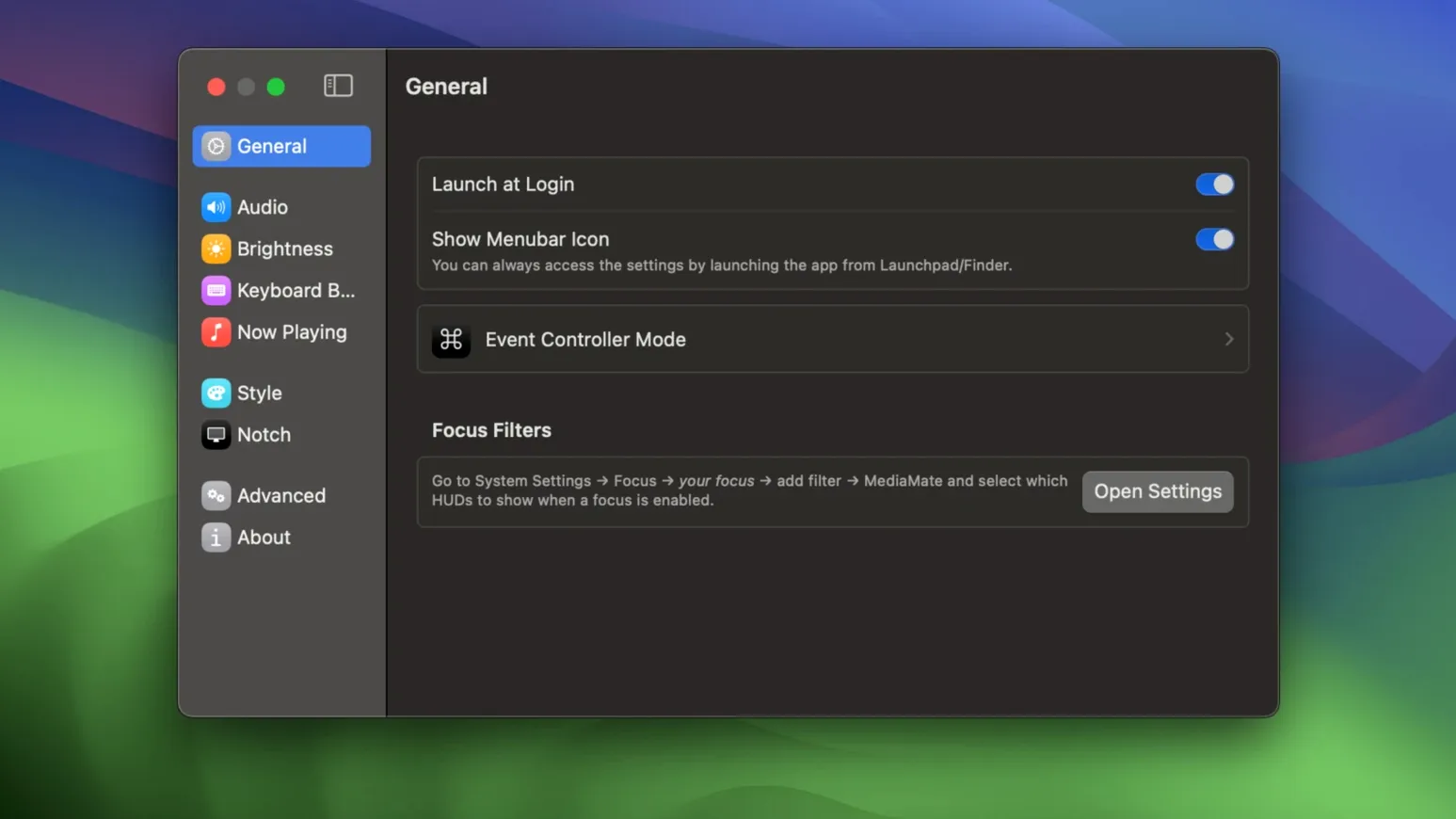
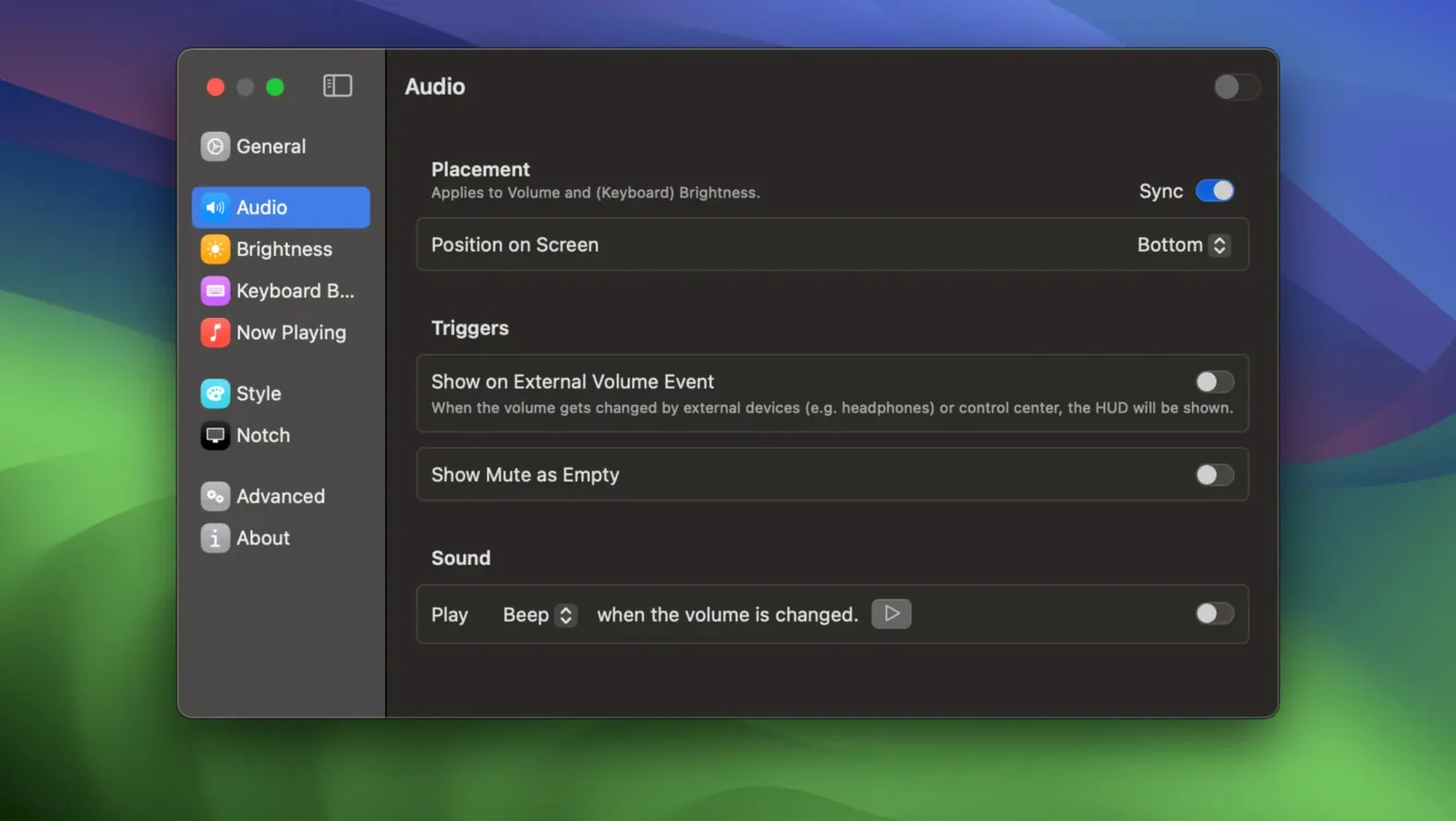
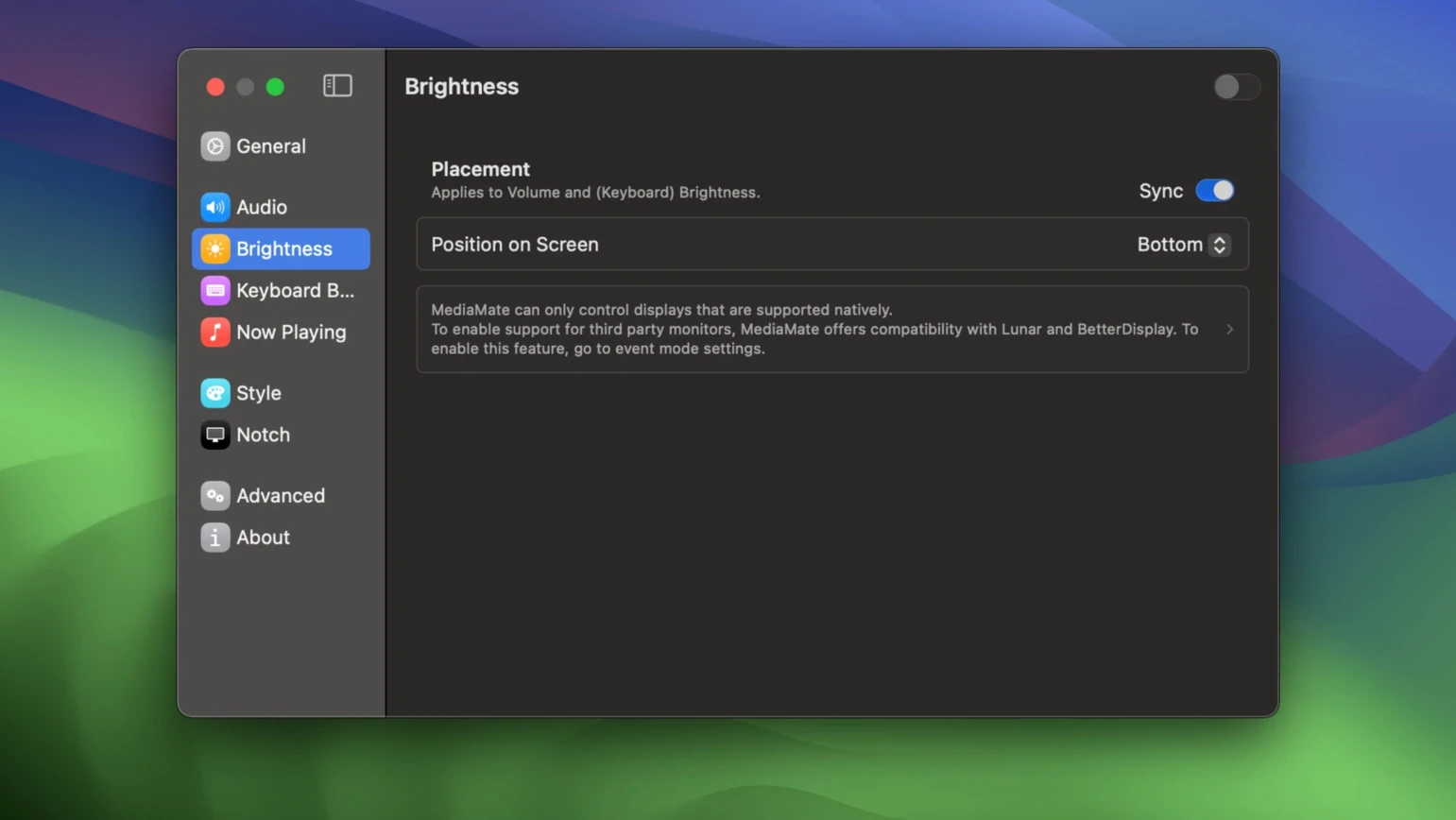
MediaMate runs on any Mac with macOS 13 Ventura or later, both Intel and Apple Silicon. If you have a Touch Bar model, a separate mode is available in settings. Here is a practical way to set it up for a cleaner on-screen display.
- Launch MediaMate and grant Accessibility permission when prompted — this lets the app replace the system overlays.
- Choose a HUD style for volume. The compact bar sits at the top edge and disappears fast.
- Pick a brightness HUD shape. A slim pill design keeps the focus on your work.
- Test both sliders using your keyboard function keys. The standard macOS blocks are gone.
- On a Touch Bar Mac, toggle the dedicated mode so changes show on the main screen.
- Adjust the on-screen duration and position from the app’s preferences to match your workflow speed.
Once configured, the new HUDs appear for every volume and brightness change without further input. The interface stays in English and the app supports all current Macs.
No, it won't block system updates
One of the first things people check is whether MediaMate interferes with system updates. It does not. The app hooks into macOS without modifying system files, so point updates and major upgrades proceed normally. A few users search for mediamate mac thinking it requires Terminal commands or a complex setup. It does not — the disk image contains a standard drag-to-Applications install.
Another common question: does it slow down older Intel Macs? The app runs lean. Both the Intel and Apple Silicon builds stay quiet in the background, waking only when you press a function key. If you stumbled across a mediamate crack query, you can grab that build and simply check that it has full disk access and accessibility permissions enabled so it runs without a hitch.
Touch Bar owners often ask whether the HUD duplicates on both the bar and the main display. By default, it shows only on the Touch Bar. Toggle the separate mode in preferences to push it onto the main screen, which is useful for external monitors or clamshell setups.
Make the overlay stay visible longer while typing
- HUD duration. The default fade time is quick. If you miss the indicator while typing, lengthen it by a second or two in the Appearance tab.
- Screen edge. The volume bar defaults to the top centre. Move it to the left or right edge so it never covers a video’s playback controls.
- Now Playing widget. Turn it on if you switch tracks often. It shows a small album art thumbnail and track name, much like a mini player overlay.
- Keyboard backlight indicator. Enable it if your Mac has backlit keys. The overlay appears only when you adjust brightness on the keyboard itself.
- Opacity. Dial it down in the style settings. A semi-transparent HUD blends into dark mode desktops without distracting from code or design work.
MonitorControl leaves the native HUDs alone
If you have searched for mediamate mac app alongside alternatives, you have probably seen MonitorControl. That app focuses on external display brightness and volume via DDC. It does not replace the macOS HUDs themselves — it adds controls for third-party monitors. MediaMate is strictly about the on-screen overlays for your built-in display and keyboard. The two can run together without conflict.
HazeOver dims background windows to spotlight the active one. It is a focus tool, not a HUD replacement. Some users pair it with MediaMate for a cleaner desktop, but HazeOver does not touch the system volume or brightness indicators at all.
Then there is BeardedSpice, which grabbed media key control for web players like Spotify and YouTube. It has not been updated for Apple Silicon and no longer works reliably on recent macOS versions. MediaMate’s Now Playing widget is simpler — it reads whatever is currently playing in Music or Spotify — but it works on every Mac this app supports. If you want a lightweight overlay rather than a full remote-control layer, MediaMate fits better.
- macOS 13 Ventura or later
- Intel or Apple Silicon Mac
Questions the team asks
It requires macOS 13 Ventura or later and supports both Intel and Apple Silicon Macs.
Yes, Touch Bar Macs need a separate mode enabled in the app’s settings to display the HUDs on the main screen.
The interface is available in English.







Comments 0
Sign in or create an account to add a comment.
No comments yet. They go up after moderation.