

Melodyne — Mac download
Download (97 MB) Earlier builds
Ticked
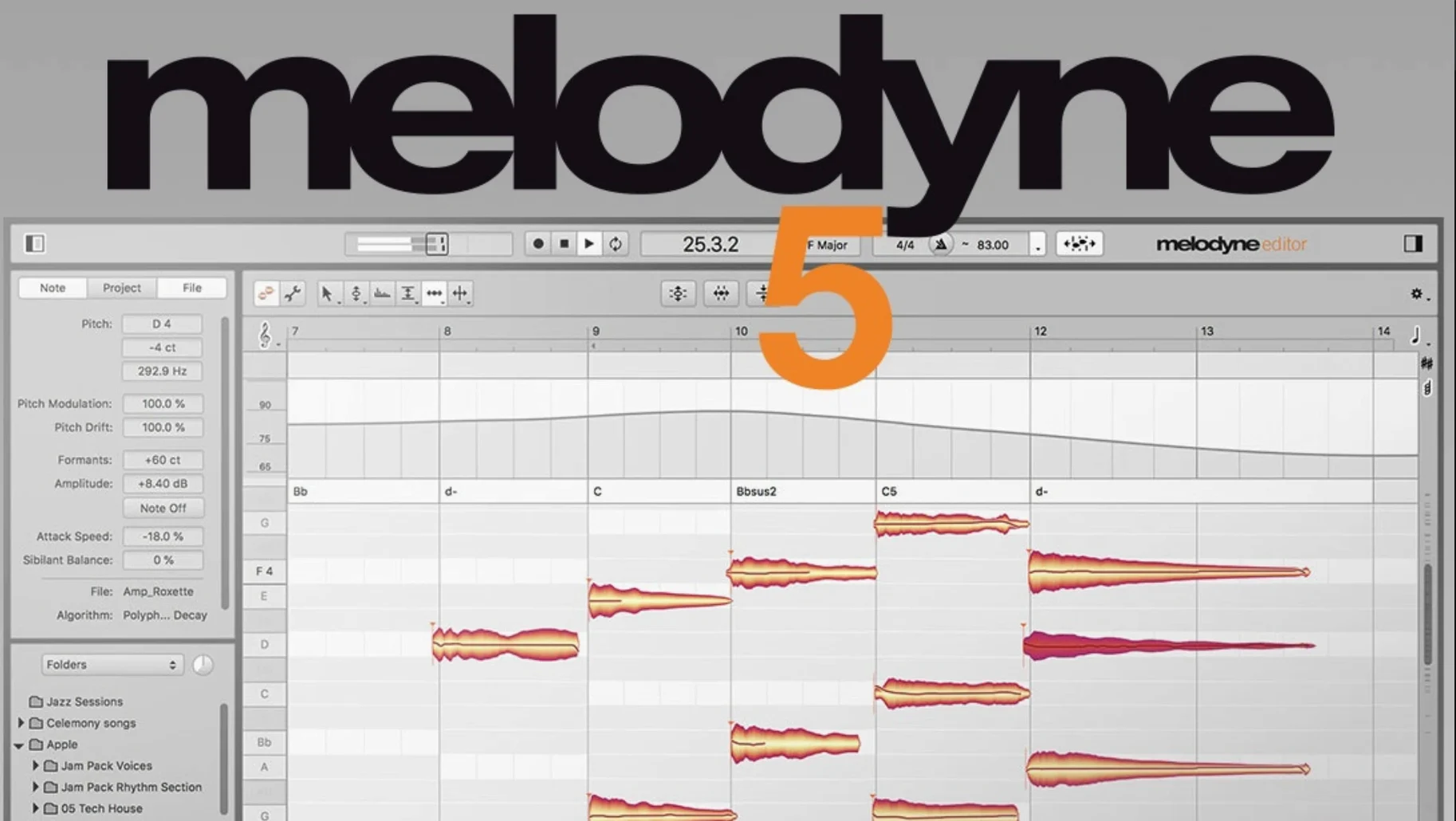
Audio recordings lock mistakes in place until you reach for the right tool. Melodyne cracked opens up monophonic and polyphonic material, showing you every note on a grid where you can reshape what was recorded.
- Note-by-note pitch correction — drag individual notes to fix tuning without affecting the rest of the take.
- Timing and length editing — nudge notes earlier or later, stretch or shrink them to tighten a performance.
- Vibrato and formant control — dial vibrato depth in or out and shift formants to change character without chipmunk artefacts.
- Sibilant and breath balancing — pull back harsh esses or boost breath noise on isolated syllables manually.
- Chord and key detection — the software reads the harmonic content of a track and displays recognised chords and tunings.
- Percussive Pitched algorithm — handles pitched percussion instruments that regular algorithms misread.
Everything stays inside your DAW as a plug-in. A clean visual grid replaces guesswork, so corrections happen fast and sound like the performance, not the fix.
Workflow: Tuning a Vocal Without Losing the Performance
Opening a raw lead vocal in Melodyne for the first time always follows the same checklist. Here is how to correct pitch while keeping the singer's character intact.
- Transfer the vocal into Melodyne via ARA or real-time capture. Wait for the blob display to populate.
- Switch to the Note Editor and select all blobs. Go to Edit > Select All (Cmd-A).
- Apply a gentle pitch centre with Correct Pitch (Option-Shift-P). Set pitch centre around 65-75%, not 100%. A fully centred vocal sounds like a robot.
- Switch to the Pitch Modulation tool. Listen for notes where vibrato wobbles too much or too little. Drag modulation up on held notes that sound flat; pull it back on over-sung endings.
- Move to the Pitch Drift tool. Look for notes where pitch slides into the target. Long scoops at phrase starts often need tightening — drag the drift line flatter.
- Spot-check sibilants. Switch to the Sibilant tool and lower hot ess sounds by 3-6 dB on the individual blob. Do not blanket-process the whole track.
- Check formants on any notes you moved more than two semitones. Open the Formant tool and nudge the curve back until the voice sounds natural.
- Play the full take against the instrumental. Bypass Melodyne to compare. The goal is to forget the tuning happened.
The whole process takes about ten minutes on a three-minute lead vocal once you know the shortcuts. Do less, not more.
12 instances, 40 tracks, still responsive on M1
Melodyne 5.4.2 on Apple Silicon launches quickly and loads ARA data from a DAW project without much waiting. On an M1 Mac with 16 GB of RAM, a session with twelve Melodyne instances and forty audio tracks stays responsive. The plug-in does not spike the CPU during playback the way some real-time analysers do.
Intel Macs with older processors feel the weight sooner. Four or five instances on a 2017 MacBook Pro push the fan and introduce occasional UI lag when redrawing blobs. Rendering or committing tracks after editing keeps the session moving. Trackpad scrolling improved in this build; two-finger zoom on the note grid now tracks finger movement without jumping.
Stability is solid in ARA mode with Studio One and Logic Pro. One crash condition from the previous version — opening Melodyne while the DAW was still scanning plug-ins — has been patched. During a full day of vocal comping and timing edits, the software did not drop out or corrupt transfers.
Over-centering pitch kills the vocal
New users treat Melodyne like a tuner pedal and apply the same correction everywhere. That habit ruins more vocals than bad singing does.
Over-centering pitch. Dragging every note dead centre removes the micro-movements that make a voice human. Stay below 80% pitch centre on lead vocals, and leave backing harmonies a touch looser unless you want synth-pad stiffness.
Ignoring note separations. Melodyne sometimes splits a long note into two blobs. Beginners miss this and tune only half the note. The result is a sudden pitch jump mid-syllable. Use the Note Separation tool to merge or split blobs before tuning.
Correcting before timing. Fixing pitch on a note you later move in time means redoing work. Straighten the timing grid first, then tune what remains.
Forgetting to bypass and compare. Ears adapt quickly to processed audio. Toggle bypass every few minutes. If the tuned version sounds "produced" rather than "right," back off the corrections.
Quiet head voice didn’t generate any blobs
Some recordings trip up the analysis. Here are the problems that show up most often and how to clear them.
Blobs missing on quiet sections. A breathy head-voice phrase may not generate any blobs. Raise the clip gain in the DAW before transferring, or use the Amplitude tool inside Melodyne to boost the waveform so the algorithm can read it. Drop the level back after editing.
Polyphonic material analysed as noise. Guitar strums or piano chords sometimes produce a grey smear instead of clean blobs. Switch the algorithm to Polyphonic or Percussive Pitched before re-transferring. The default Melodic algorithm cannot separate overlapping notes.
Pitch jumps between blobs. Two adjacent blobs with a large pitch gap create an audible glitch. Select both and use Edit > Make Note-Based Pitch Transition. The software smooths the connection so the ear hears a slide, not a step.
Melodyne not showing up in the DAW. After installing Melodyne cracked on Mac, some hosts do not scan the plug-in automatically. Rescan the plug-in folder from the DAW preferences. If the ARA extension does not load, check that the DAW supports ARA2 — older versions of some hosts do not. Restarting the Mac after the initial install often sorts silent failures.
For users who grabbed a Melodyne torrent and wonder why the standalone app opens but the plug-in does not appear, the issue is usually a mismatched install location. Move the component and VST3 files to the correct system folders and clear the DAW's plug-in cache.
- Optimizations and bug fixes for macOS Sequoia.
- Trackpad scrolling now smoother across the editor.
- Fixed a crash that could happen when opening Melodyne in ARA or plug-in use cases.
- macOS 10.12 or later
- Intel or Apple Silicon Mac
- English interface
Questions the team asks
Yes. It separates notes and lets you adjust pitch, timing, volume, sibilants and breath on a per-syllable basis.







Comments 0
Sign in or create an account to add a comment.
No comments yet. They go up after moderation.